Red or White Oak?
Red oaks and white oaks are found throughout the forests of North Mississippi. Though similar, the two groups differ in appearance, wood anatomy, and lumber uses.

You can tell them apart most easily by the leaves and acorns.
Red oaks have pointed leaf lobes with tiny bristle tips, and their acorns take two growing seasons to mature. White oaks have rounded leaf lobes without bristles, and their acorns mature in one season. The bark can help too: white oak bark is often lighter and flaky, while red oak bark is darker with long vertical ridges.
When it comes to how the two groups are used, you may think the color is the main difference. While the different species do have different coloring and distinct appearances in their ray fleck, the wood structure is the biggest industrial difference.
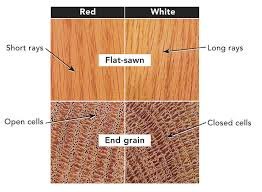
Red oak has open pores that run through the grain, making it porous and less resistant to moisture and decay.
White oak has closed pores (often plugged with tyloses), making it water-tight and very rot resistant.
Because of this, red oak lumber is widely used for interior flooring, furniture, cabinets, millwork, and trim. White oak lumber is used where strength and moisture resistance matter: barrels and wine casks, boat building, exterior doors, bridges, trailer decking, and high-end flooring.
North Mississippi has many species of both groups. Common red oaks include southern red, water, willow, cherrybark, and shumard oaks. Common white oaks include white oak, post oak, swamp chestnut, and overcup oak.
